AFSA’s Resource Library provides easy access to a wide range of materials, including newsletters, articles, publications, reports, conventions, and Acts, as well as recordings of AFSA-hosted webinars and workshops.
AFSA International Rules and the AFSA International Court
Webinar #2:
The Future in the Making
Third party funding for international arbitration using AFSA Rules
Webinar #3:
The Future in the Making
Speed and costs. Three key AFSA rules: Expedited Procedure • Emergency Arbitrators • Early Dismissals
Webinar #4:
The Future in the Making
Multiple Contracts, Joinder and Consolidation (Articles 28 - 30)
Webinar #5:
The Future in the Making
Pleadings and the Taking of Evidence in International Arbitration
Webinar #1:
The Cutting Edge
The Ethical Conundrum in International Arbitration
Webinar #2:
The Cutting Edge
Arbitration in the Modern World
Webinar #3:
The Cutting Edge
Good Faith in International Arbitration
Webinar#4:
The Cutting Edge
Drafting Effective Arbitration Clauses
AFSA SARIPA Business Rescue Division
AFSA & SARIPA are jointly launching a dispute resolution process to quickly and effectively resolve disputes arising in connection with business rescue.
Hosted by AFSA International in collaboration with the Indonesian Dispute Board.
Navigating AFSA's International Arbitration Rules for Effective Dispute Resolution.
Session #1
Mastering Mediation, from the Ground Up: Mediation 101
Presented by Duncan Turner SC
Session #2
Mastering Mediation, from the Ground Up: Building Bridges: Mediation in Construction and Mining Disputes
Presented by Chris Loxton SC
Session #3
Mastering Mediation, from the Ground Up: Mediation in Action
Presented by Patrick Deale and Belinda Scriba
AFSA/SARIPA Business Rescue Forum
Facilitator: Adv Lizelle Acker with the distinguished Adv Azhar Bham SC, Colin Strime and Adv Duncan Turner SC as her panellists.
Young AFSA & Young ICCA WORKSHOP
Mastering Written and Oral Advocacy in International Arbitration: Johannesburg Edition
AFSA INTERNATIONAL, CIARB AND HKA WORKSHOP
Getting Effective Evidence from your Independent Expert
Young AFSA & Young AfAA WEBINAR
How to enforce arbitral awards? All you need to know if you are practicing in South Africa, Zambia, Zimbabwe and the United Arab Emirates
Young AFSA & BriefCo WEBINAR
Dealing with Costs in Arbitration
Young AFSA WEBINAR
on drafting arbitration agreements
AFSA ARBITRATION TRAINING SESSION 1
Efficiency in Arbitration: Balancing Procedural Fairness with Time and Cost
Young AFSA WEBINAR
Research in Arbitration
Young AFSA WEBINAR
Arbitration 101 - A Practical Introduction to Arbitration
Panel Discussion
How can AI-based evidence be effectively deployed in arbitration?
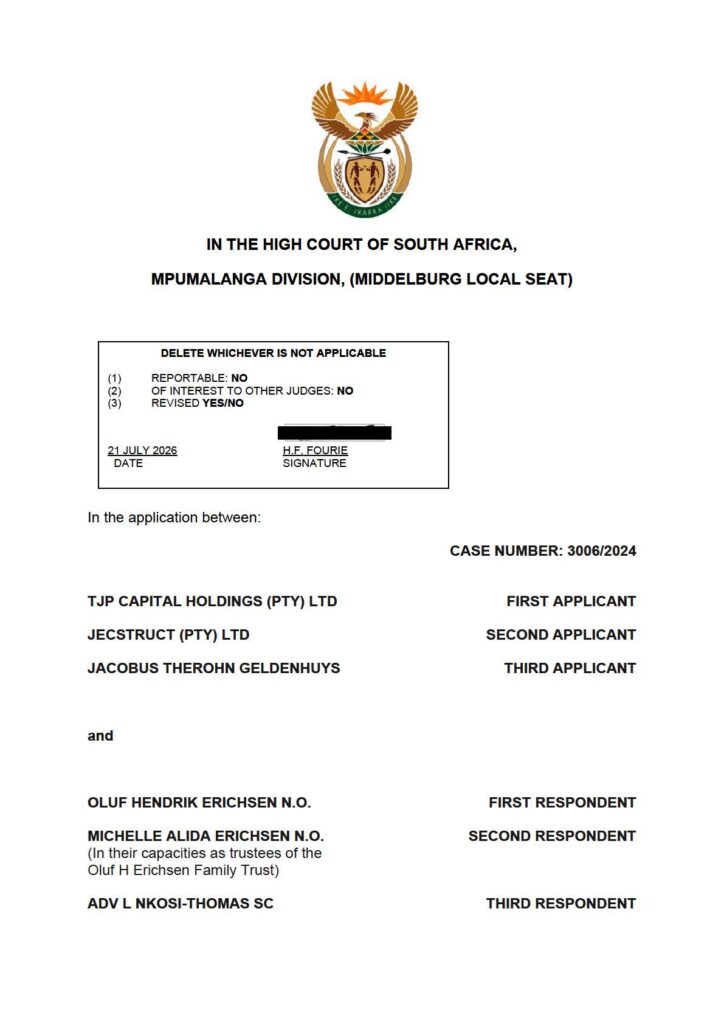
In TJP Capital Holdings (Pty) Ltd v Oluf Hendrik Erichsen NO, the High Court considered three issues: the interplay between arbitration and litigation; the possible repudiation of an arbitration agreement and its ultimate effects; and whether good cause existed for the Court to intervene. The court found that the manner in which the Arbitrator was addressed and attacked in the correspondence by TJP’s legal representatives can only be regarded asunnecessary and out of order. The Court also noted the harmony of arbitration and the Constitution. See Lufuno Mphaphuli & Associates (Pty) Ltd [2], 2009 (4) SA 529 (CC). The binding effect of Section 3(2) of the Arbitration Act, 42 of 1965, was noted, and the question of when a court may set it aside under Section 3(2) was considered. After a dispute was referred to arbitration, TJP insisted the matter proceed on motion, challenged procedural rulings, repeatedly alleged delay and unfairness, and unilaterally purported to terminate the arbitrator’s appointment. The Trust regarded this conduct as repudiation of the arbitration agreement, accepted the repudiation, refused to participate in fresh arbitration, and instituted litigation. Fourie AJ held that arbitration agreements bind parties and may be terminated only by consent or court order. The court found that TJP’s obstruction, irregular termination attempt, and proposed alteration of the arbitral process demonstrated an unwillingness to remain bound. There comes a point in the process, however, that the Court should evaluate whether persistence with a process remains viable and will lead to ultimate justice, where the process chosen has been delayed, frustrated, ineffective, a waste of money, and at least some of the participants in the process have lost faith in that process to bring ultimate justice between the parties. The Court found good cause to set aside the arbitration agreement, dismissed TJP’s stay application, and allowed the litigation to proceed. TJP was ordered to pay costs.
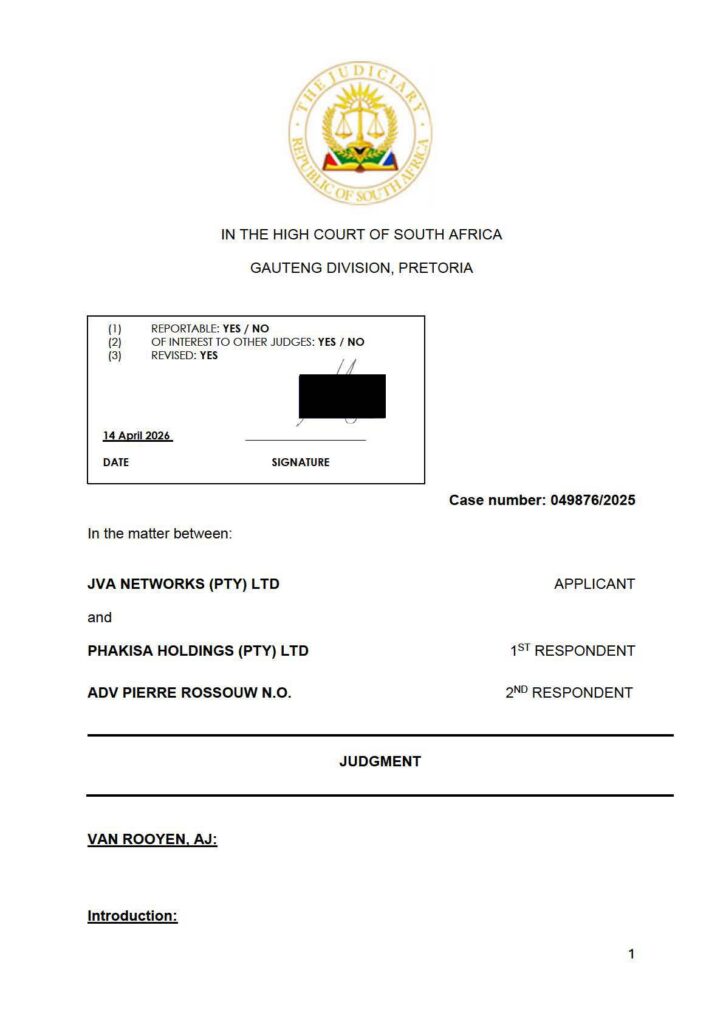
In JVA Networks v Phakisa Holdings, the High Court examined the limits of an arbitrator’s mandate under section 33(1)(b) of the Arbitration Act 42 of 1965. The parties’ pre-arbitration agreement provided that pleadings would define the issues for determination. Those pleadings treated the application of a remuneration factor as common cause. Nevertheless, the arbitrator independently interpreted the Engagement Agreement, concluded that the factor was inapplicable, and disregarded a concession regarding employee tax incentives. Van Rooyen AJ held that an arbitrator has no inherent jurisdiction to depart from the pleaded issues or decide matters that the parties have accepted as common cause. This was not merely an incorrect decision on the merits: the arbitrator exceeded his powers and committed a gross irregularity. The Court condoned the late review application, set aside the award, remitted the dispute to the same arbitrator for an award, and awarded costs against Phakisa.
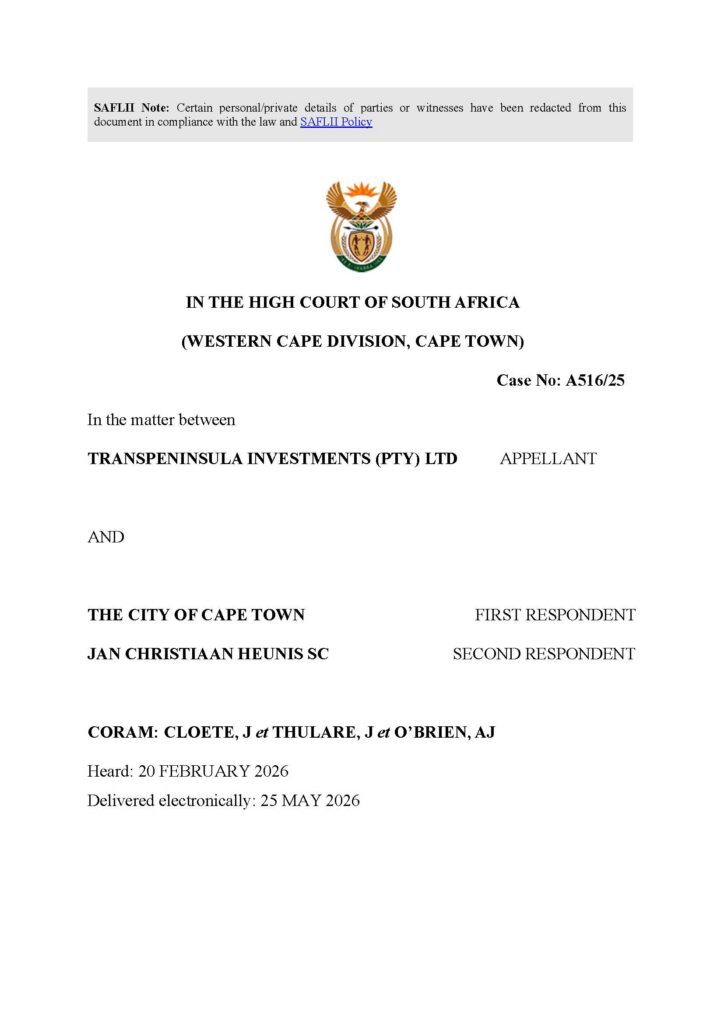
In Transpeninsula Investments v City of Cape Town, the Full Court examined the principal issue on appeal, which is whether grounds existed in terms of s3(1)(b) of the Arbitration Act, 42 of 1965 for setting aside the three awards in respect of claim D, or any of them. The Full Court applied s 33 (1)(b) of the Act. Although the gross irregularities were made in good faith, their cumulative effect deprived the City of a fair trial on these issues. It follows that the decision in claim D of the award could not stand. The arbitration concerned responsibility for the cost of replacement tyres, brake pads, and brake discs on buses operated by Transpeninsula. The City contended that the arbitrator failed to determine all issues submitted, misunderstood the parties’ minute on quantum, overlooked its counterclaim and payments already made, and granted relief that Transpeninsula had neither pleaded nor sought. The Court emphasised that an arbitrator may be wrong on the law or facts without the award being reviewable. However, the cumulative effect of failing to determine issues or finding on issues S 3 CASESoutside the pleadings prevented a fair hearing and exceeded the arbitrator’s powers. The irregularities required setting aside the award. The appeal was dismissed, and Claim D and the City’s counterclaim were referred to a new arbitrator.
“AFSA delivers efficient dispute resolution across commercial, domestic, and international matters, backed by a reputation built over decades.”
About us
AFSA administers trusted, confidential dispute resolution across Southern Africa and beyond, managing domestic and international disputes through world-class mediation, arbitration, and related processes with integrity and efficiency.
The Arbitration Foundation of Southern Africa (AFSA) is a non-profit dispute resolution authority that administers and manages the confidential resolution of a wide range of domestic and international disputes through administered mediation, arbitration, and related processes. AFSA’s head office is in Sandton, Johannesburg, with branch offices in Cape Town, Pretoria, Durban, and the Garden Route.