Register an Arbitration case
International Arbitration
Domestic Commercial Arbitration
Domestic Expedited Arbitration
Register a Mediation case
Mediation
Administered Mediation

- CAJAC
- SADC Alliance
- BRICS


Duration: 5 days (Monday – Friday)
Registration deadline 14 Sept
The ICA course is structured as a sophisticated, practice-oriented, and highly interactive training programme that balances doctrinal content with practical skills development.
All components of the course are taught from both:
reflecting the practical realities of international arbitration practice.
To ensure exposure to international best practice, the course is delivered by experienced academics, senior practitioners, arbitrators, institutional representatives, and guest lecturers who are actively engaged in international arbitration in South Africa and internationally.
A defining feature of the ICA programme is the use of the Socratic Method as a core teaching technique.
Rather than relying exclusively on lecture-style presentations, participants are engaged through structured questioning and interactive analytical discussion designed to:
These skills are directly transferable to:
Lecturer: Michael Kuper SC
Chairman of AFSA
Topics include:
Lecturer: Professor David Butler
Topics include:
Lecturer: Professor David Butler
Topics include:
Lecturer: Professor David Butler
Topics include:
A. Tribunal Perspective
Lecturer: Des Williams
AFSA Court Member
Topics include:
This segment includes Socratic analysis of practical procedural dilemmas arising in arbitration proceedings.
B. Institutional & Secretariat Perspective
Lecturer: Adv Svetlana Vasileva
Secretary General, AFSA
Topics include:
Guest Lecturer: Justice Sharise Weiner
This special advocacy-focused segment is part of the broader Arbitration Advocacy Masterclass initiative, developed in cooperation with the General Council of the Bar of South Africa (GCB), and is especially tailored for the AFSA ICA syllabus.
Topics include:
The advocacy component incorporates practical simulations and live procedural exercises designed to replicate the realities of arbitration hearings and tribunal interaction.
The ICA module combines:
The programme is intentionally intensive and demands active preparation and participation throughout.
To successfully complete the ICA Course, participants are required to:
Participants completing only the ICA Course will receive an:
AFSA/UP Certificate of Completion in International Commercial Arbitration
Participants completing the 3 components of the AFSA Advanced Programme in Alternative Dispute Resolution and successfully meeting the assessment and attendance requirements will become eligible for the:
AFSA/UP Advanced Programme in Alternative Dispute Resolution Certificate
CONDITIONS

Adv Vasileva serves as the Secretary-General of AFSA. She brings over 28 years of international legal experience, beginning with advisory work on privatisation and economic reform initiatives across East Europe. For the past 15 years, she has been based in Africa, with a professional footprint in Egypt, Seychelles, and South Africa. Her broader legal advisory work has included collaboration with regulatory authorities, lawmakers, and international organisations on legislative reform, institutional developments, and regional legal harmonisation. She brings extensive expertise in international investment and commercial arbitration, as well as in commercial law, with a focus on cross-border transactions, trade finance, and international contract law. In addition to her subject-matter expertise, she has played a leading role in advancing arbitration practice and supporting the institutional development of arbitration across the continent, through her active involvement in rule reform and capacity-building initiatives. Svetlana is widely recognised for her ability to navigate and bridge diverse legal traditions—common law, civil law, and mixed systems—supporting the development of cohesive and effective dispute resolution frameworks in Africa.
With two Master of Laws degrees—one in International Economic Law from the University of the Witwatersrand (South Africa), and another in European Law from Burgas Free University (Bulgaria). Admitted as an advocate in Bulgaria/EU, she is also a certified mediator accredited in both the EU and South Africa and Quality Management System (ISO 9001) leading auditor. Her fluency in English, Russian, and Bulgarian supports her work across jurisdictions and international forums.
Adv. Vasileva regularly contributes to thought leadership in international arbitration, including recent publications such as the AfAA Arbitration Compass and commentary on South Africa’s evolving role in regional dispute resolution. Her current focus includes conflict-of-laws in international commercial arbitration, institutional cooperation, and ensuring that African voices are fully integrated into global dispute resolution dialogue.
She is actively involved in numerous professional organisations, including the International Bar Association (Arbitration Committee), the International Law Association (Committee on Conflict of Laws), the American Bar Association (International Section), and the New York State Bar Association (Africa Arbitration and ADR Committee). She also serves as the Africa Regional Representative for the Asia‑Pacific Forum for International Arbitration, is a member of the Africa Committee of the Campaign for Greener Arbitrations, and is affiliated with ArbitralWomen.
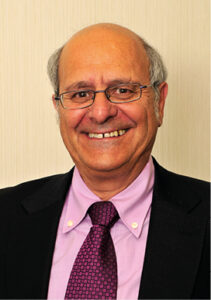
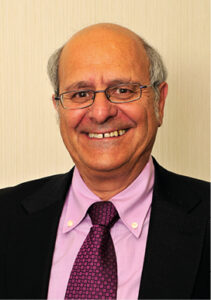
Adv Michael Kuper is a Senior Advocate at the Johannesburg Bar and one of South Africa’s most prominent arbitration specialists. His practice is focused on complex arbitration matters, including corporate, shareholder, partnership, and broader commercial and investment disputes. He is a recognised authority in both domestic and international arbitration.
A seasoned leader in the legal profession, Michael has served three terms as Chairman of the Johannesburg Bar and held the position of Vice-Chairman of
the General Council of the Bar. He has also acted as a Judge of the High Court on several occasions, bringing judicial insight to his extensive arbitration and mediation work.
Michael’s arbitration career spans decades and crosses borders. He has acted as counsel, arbitrator, or mediator in numerous domestic, regional (SADC), and
international proceedings. His regional engagements have included cross-border disputes across Southern Africa and the Indian Ocean Islands. Internationally, he has appeared, or presided, in arbitrations seated in the United Kingdom, France, Nigeria, and the United States of America.
He has been appointed to panels by prestigious institutions, including the
International Chamber of Commerce (ICC) and the London Court of International Arbitration (LCIA). He acted as lead counsel for South Africa before the Permanent Court of Arbitration and has served as Country Rapporteur for South Africa.
Michael also holds panel appointments with multiple international arbitration centres, including:
• Hainan Arbitration Commission
• Shanghai International Arbitration Centre
• Shenzhen Court of International Arbitration
• Arbitration Foundation of Southern Africa (AFSA)
• China-Africa Joint Arbitration Centre (CAJAC)
• BIAC International Arbitration Centre)
He has held an appointment of Research Fellow of the Institute for Belt and Road Initiative and Research Fellow of the Institute of BRICS Leading Studies, East China University of Political Science and Law. He is a member of the Executive Council of ICDPASO.
He currently serves as Chairman of both AFSA and CAJAC Johannesburg, continuing to shape arbitration practice and policy across Africa and globally.
As a presenter in the AFSA ADR Programme, Michael brings unparalleled insight, international perspective, and thought leadership, allowing participants to learn from one of the foremost figures in the African arbitration landscape.

Professor David Butler joined South Africa’s Stellenbosch University’s Department of Mercantile Law in January 1979 and worked there as its guiding spirit until his retirement in December 2010. He remains involved with the Department in his capacity as professor emeritus.
Professor Butler graduated with BComm (Law) and LLB degrees from Stellenbosch University in 1972. The latter was awarded cum laude. He obtained the LLD degree from Stellenbosch University in 1987. From 1973-1978, he was employed by Bisset, Boehmke and McBlain, a Cape Town firm of attorneys.
An esteemed academic, Professor Butler has taught extensively on international commercial arbitration, also for AFSA and has presented workshops for the Association of Arbitrators of Southern Africa (of which he is a life fellow). His book and other texts on arbitration have become the standard in the field, and he was the main advisor on the South African Law Reform Commission’s project on arbitration, leading eventually to the International Arbitration Act 15 of 2017.
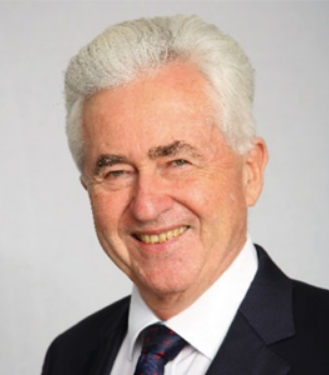
Des Williams is the former Chairman of Werksmans Attorneys. He is now a consultant to Werksmans and practices as an independent arbitrator. He is a former Chairman of the Litigation Committee of the International Bar Association. He was the sole South African member of the International Court of Arbitration of the ICC from 2011 to 2018. He is the current Chairman of the SADC division of AFSA and a regular speaker and lecturer on dispute-related topics in South Africa and internationally. He has presented guest lectures on arbitration at Harvard Law School, the University of the Witwatersrand and the University of Johannesburg. He regularly contributes articles on arbitration and other dispute resolution-related topics to a wide range of international publications.

Sharise Weiner was an advocate at the Johannesburg Bar for 33 years. She was admitted in 1978 and became a senior counsel in 1995. She acted as a Judge in the High Court several times over the period 1995 to 2010 and became a Judge of the High Court in 2011. She then acted as a Judge in the Supreme Court of Appeal over the years 2019 to 2022, when she was appointed as a Judge of the Supreme Court.
After being appointed to the General Commercial Panel and Appeal Panel of the Arbitration Foundation of South Africa in 1996 she acted as an arbitrator on several occasions until 2011.
She was accredited as a Commercial Mediator by the Centre for Dispute Resolution (CEDR, UK) in 2007 and mediated several commercial and matrimonial disputes between 2007and 2011.
She was called to the Bar of England and Wales in1999 and was appointed as an Honorary Bencher of Grays Inn, UK in2024.
She was the convenor of the General Council of the Bar’s Advocacy Training committee over the years 2000 to 2010 and has practised as an Advocacy Trainer for the the International Advocacy Training Institute (IATC) from 1998 to present date. She has taught advocacy skills in London, Oxford, Hong Kong, Australia, Malaysia, Singapore, Ireland and India.